
English

Views: 0 Author: CCAT Publish Time: 2025-10-09 Origin: CCAT


In construction projects, the structure form needs to be determined based on the building height, usage function, seismic performance, and groundwater investigation report. The following focuses on the key points of "structure form" for steel structures, providing clear guidance for construction selection and technical implementation.
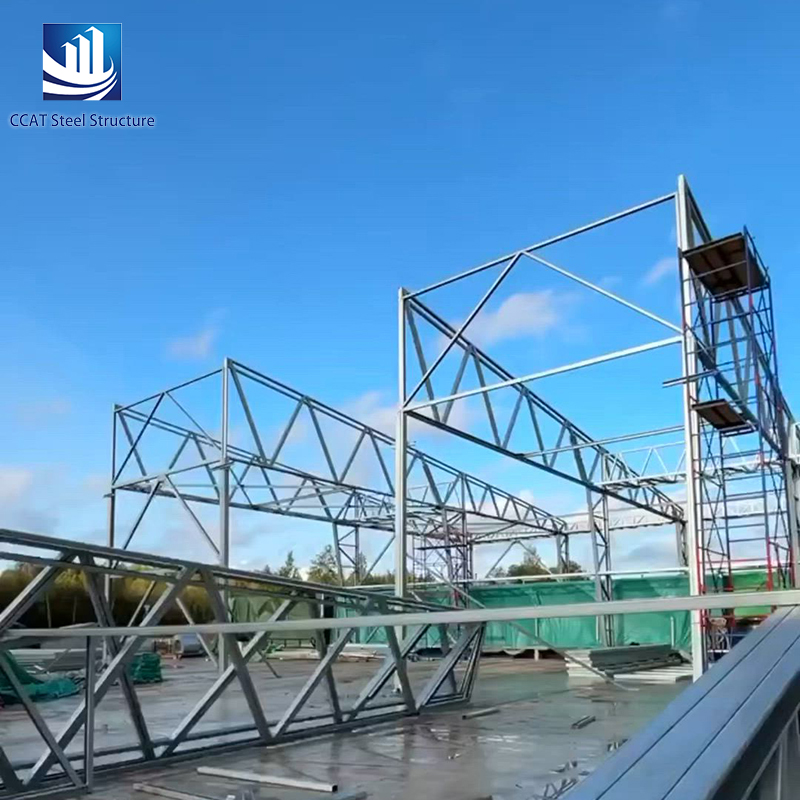
Q1. Classification and characteristics of common structural systems?
Common structural systems include brick-concrete, frame, shear wall, frame-shear wall, cylinder, truss, grid, arch, cable, thin-walled space, etc. Steel structures mainly consist of portal steel frames, frames, trusses, and grids. A single system is difficult to adapt to complex scenarios. In actual buildings, multiple systems are often combined to balance the rationality of force distribution and functional requirements.
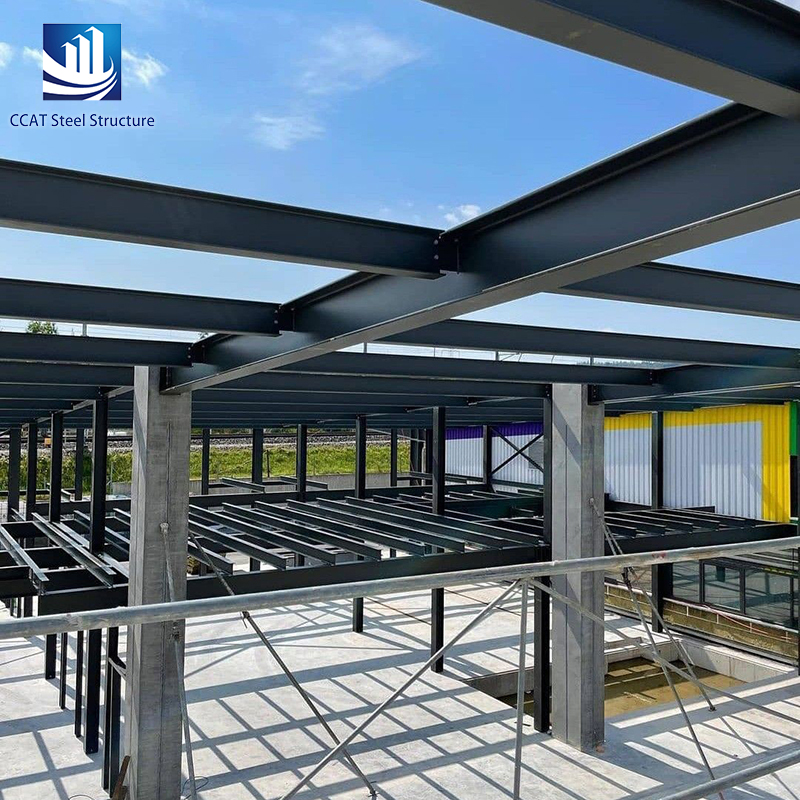
Q2. What are the key features of common steel structure types and what are some examples of their applications?
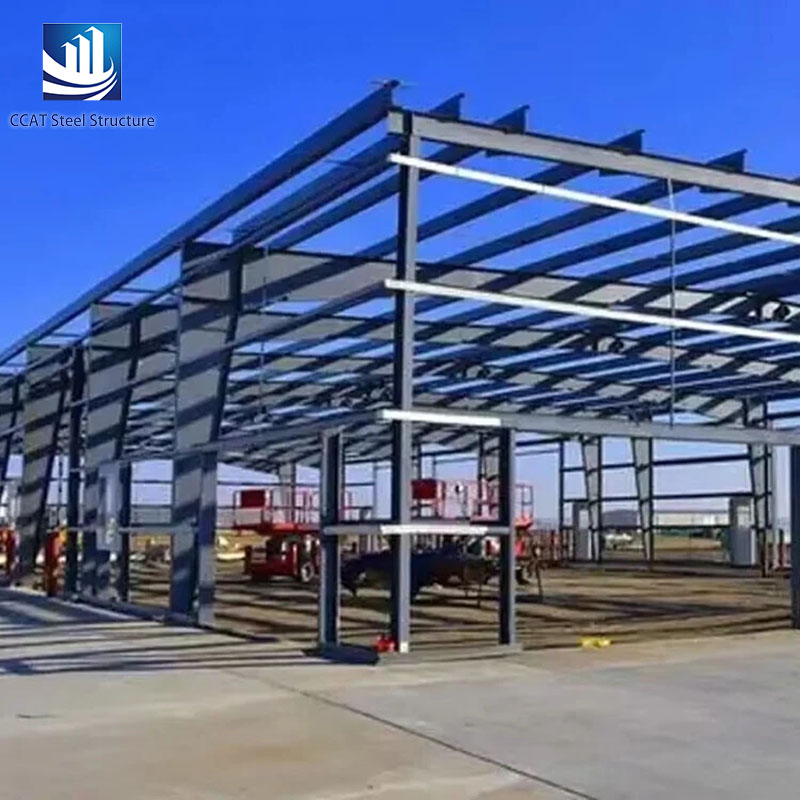
Portal frame structure has simple load-bearing, clear force transmission and fast construction speed. It is suitable for industrial plants, commercial exhibition halls, and cultural and entertainment public facilities.
Steel frame: Flexible planar layout, capable of creating large spaces. Suitable for multi-story, high-rise and super-high-rise buildings, commercial office buildings, and conference centers.
Steel trusses are composed of small-section members to form large-section components, which are lightweight yet highly strong. They are used in large-span roofs, bridges, television towers, offshore oil platforms, and corridor structures of towers.
Steel grid structures are high-order superstatic space structures with small load, light weight, high stiffness and good seismic resistance. They are used in stadiums, exhibition halls, waiting halls, canopies, aircraft hangars and roof structures of buildings.

Q3. What are the components of the portal frame factory building structure system?
Steel structure factories are divided into light steel factories and heavy steel factories. The structural system of the factory mainly consists of steel columns, wind-resistant columns, parapet columns, roof steel beams, crane beams, column splices, horizontal supports for the roof truss, wall purlins, roof purlins, skylight frames, tie rods, etc. The main load-bearing component of the portal frame is the portal frame structure, which can be single-span, multi-span, or multi-story, with an economic span of approximately 24-30 meters.
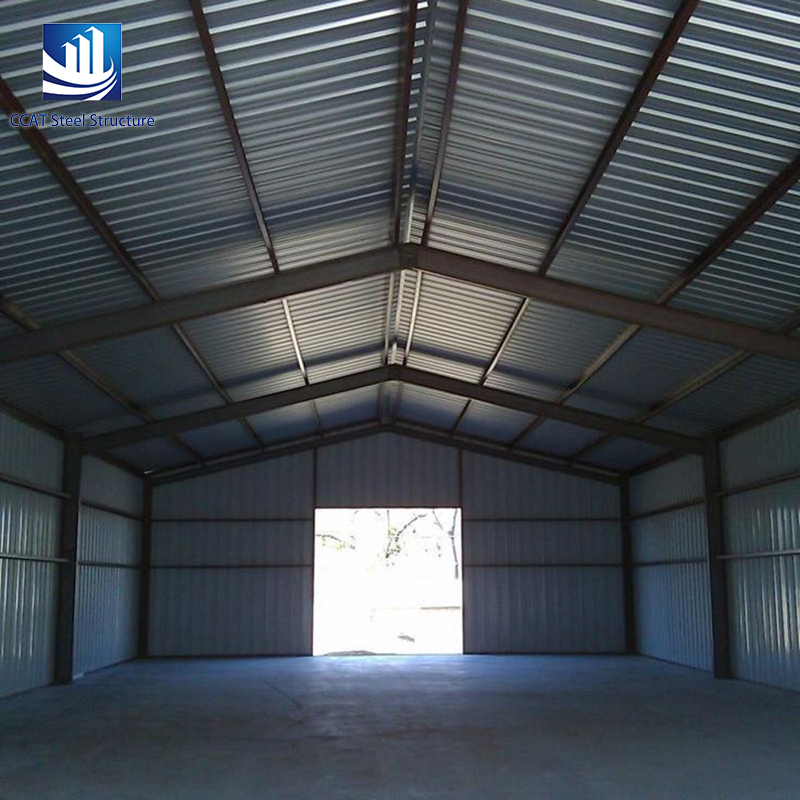
Q4. What are the common joints in portal frame factories?
The common connection types for portal steel frames include column foot connections, beam-column connections, roof truss beam-beam connections, column spacing support connections, tie rod connection nodes, and gutter support nodes, etc.
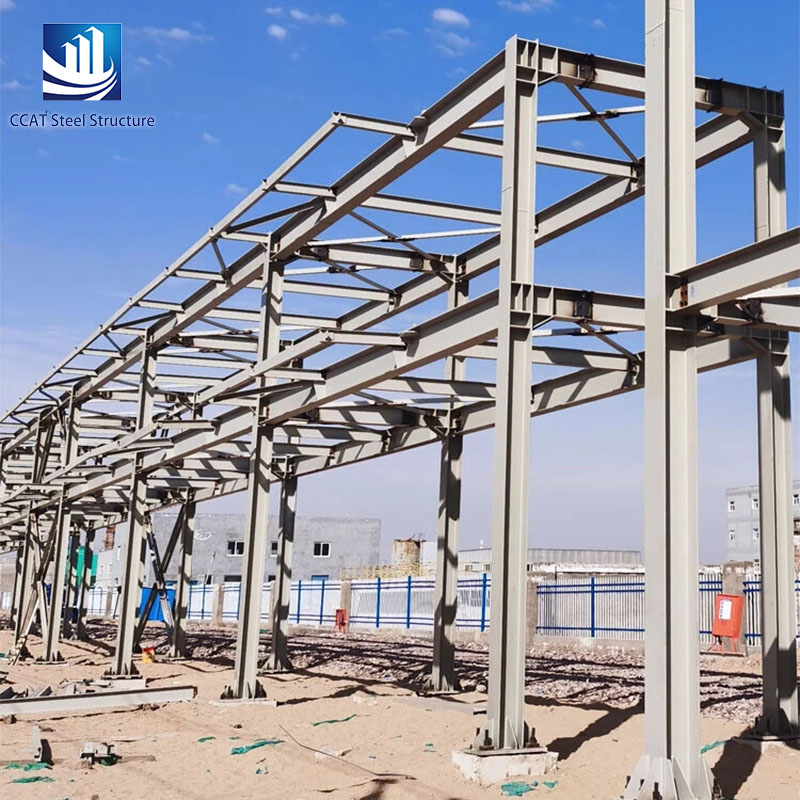
Q5. What are the components of the steel frame structure system?
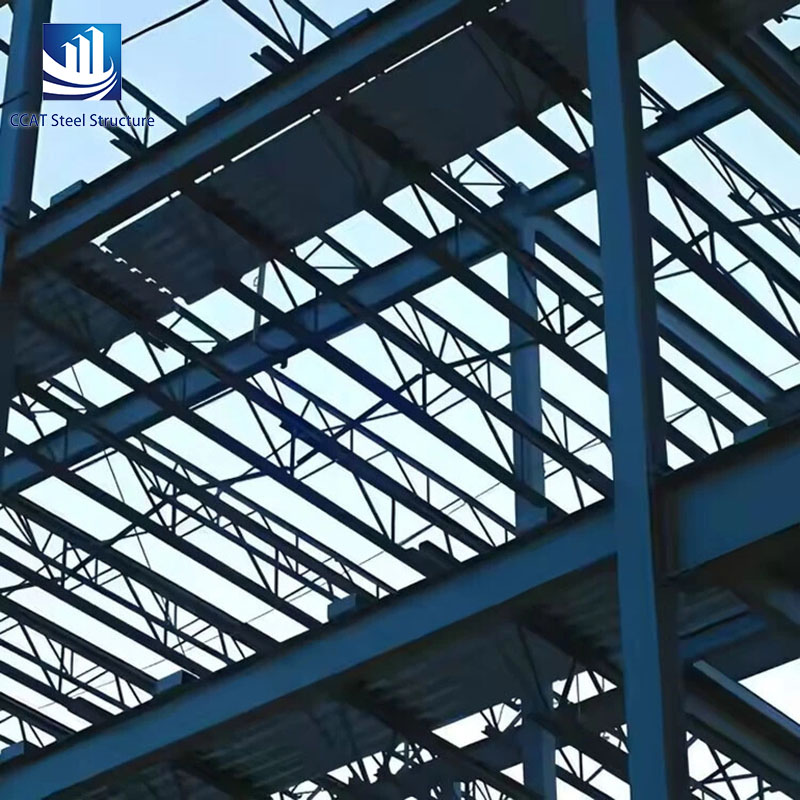
For steel frames, as the number of floors and height increase, in addition to bearing large vertical loads, the requirements for lateral resistance (wind loads, seismic effects, etc.) become the main characteristic of the frame, and its basic structural system is generally divided into three types: 1. Column-support system: relying on the synergy of columns and supports to resist lateral forces, suitable for mid-low-rise buildings. 2. Pure frame system: relying solely on the frame to resist lateral forces, with a large amount of steel usage, suitable for scenarios with fewer floors and lower seismic requirements. 3. Frame-support system (the most widely used): using pure steel frames laterally to ensure flexible space, and setting vertical column-to-column supports longitudinally to enhance stiffness, balancing space and cost.
Q6. What are the common joints in steel frames?
Common nodes of steel frames include column foot nodes, column butt joints, beam-column nodes, beam-to-beam nodes, support nodes, and beam-on-column nodes, etc.

Q7. What are the components of the steel truss structure system?
- Structural essence: It is formed by the connection of the two ends of the members. It can be divided into planar trusses (acting within a plane) and spatial trusses (acting uniformly in a three-dimensional space).
Section form: pipe truss, H-shaped steel truss, box-section truss, angle steel truss. The type is selected based on the load and span.
Core components: upper tie rod (under compression), lower tie rod (under tension), vertical rod/side diagonal rod (transmitting the load from the web rods), inter-deck support (ensuring overall stability).
Advantages of application: The steel usage is 30% - 50% less than that of solid-web beams. It has a light weight and high rigidity, making it the preferred choice for large-span and high-rise structures.
Q8. What are the common joints of steel trusses?
The common nodes of steel trusses mainly include the connection nodes between vertical members and the upper and lower chords, the connection nodes between diagonal bracing members and the upper and lower chords, and the connection nodes of the truss itself.
Q9. What are the components of the steel grid structure system?
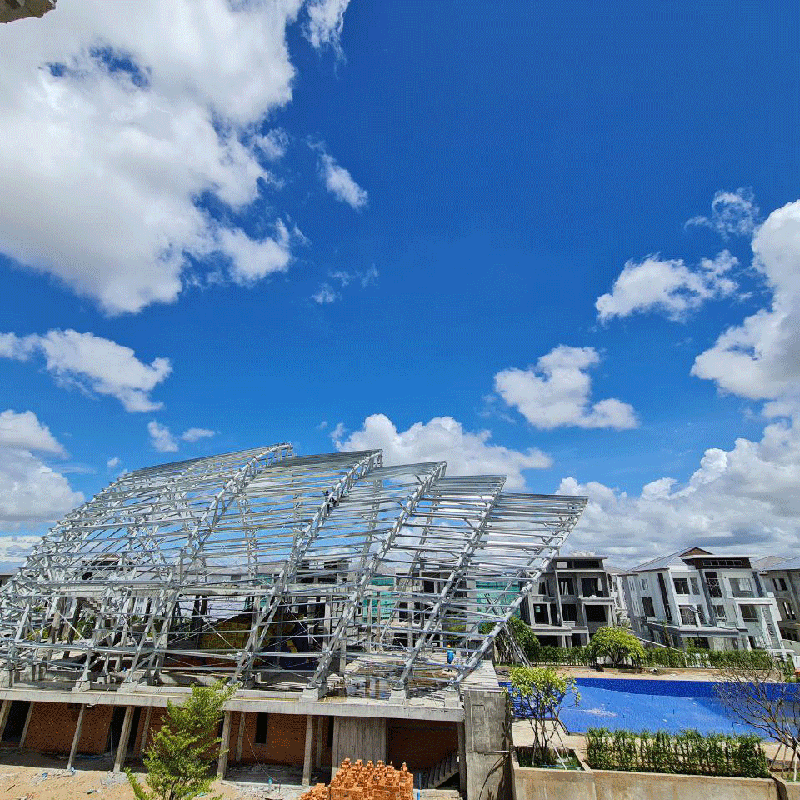
A grid structure is a spatial structure formed by connecting multiple rods in a certain grid pattern through nodes. There are many types of grid structures. They can be classified according to different criteria. In China, they are often divided into cross truss system grid structures, triangular cone system grid structures, quadrangular cone system grid structures, and hexagonal cone system grid structures based on their composition methods. The flat grid structure is mainly composed of chord members, diagonal bracing members, intermediate nodes, and support nodes.

Q10. What are the common joints in steel grid structures?
The grid structures mainly include cross plate nodes, welded hollow sphere nodes and bolted sphere nodes, as well as support nodes. The cross plate nodes are suitable for grid structures with steel sections, and the connection between the sections and the node plate is achieved through welding or high-strength bolts. The hollow sphere nodes and bolted sphere nodes are applicable to grid structures with steel tubes.


